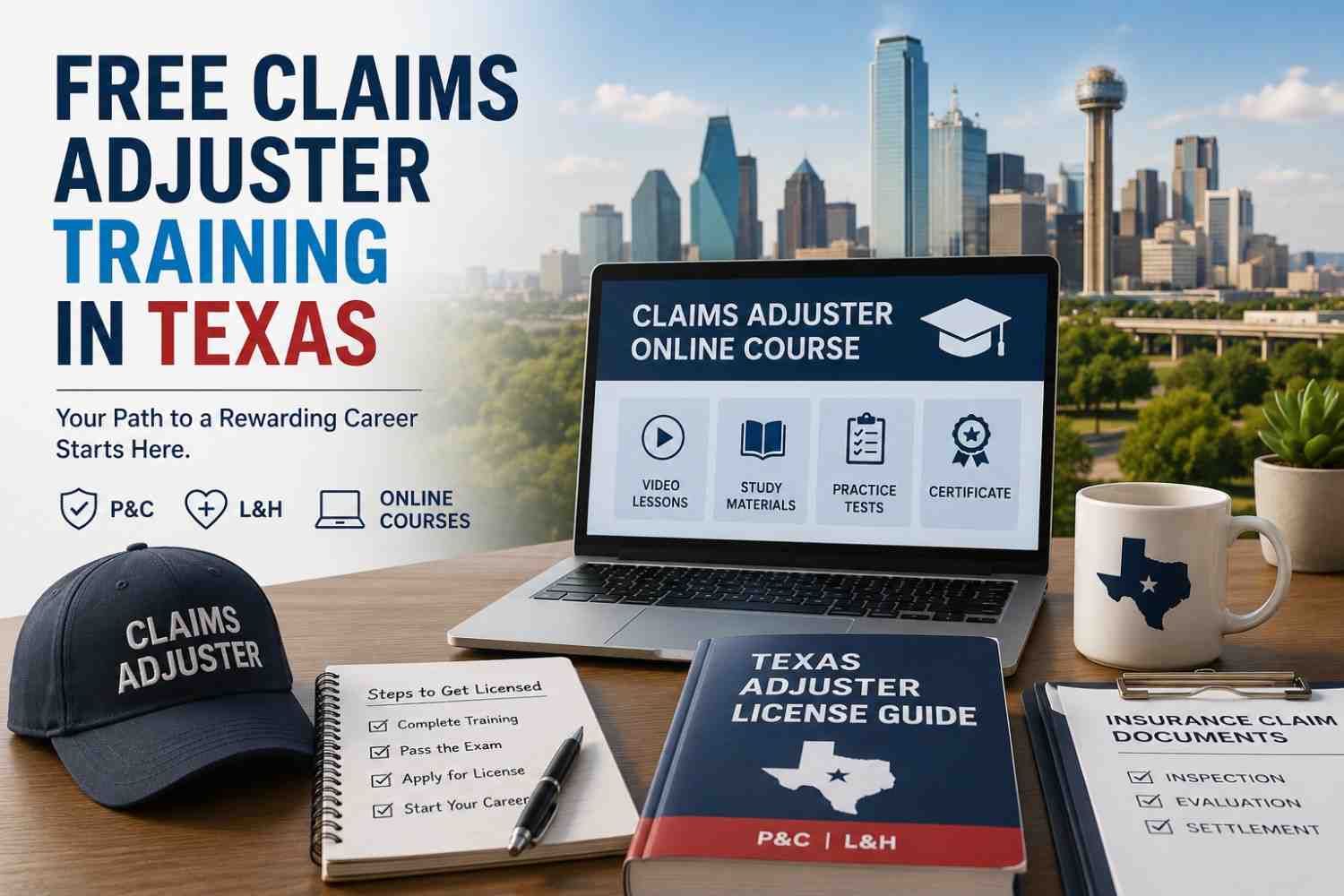
Thinking about becoming a claims adjuster? It's steady work with real growth potential, but before you sign up for anything, you're probably wondering how to find free claims adjuster training in Texas without blowing your budget. Here's what training actually costs, where the free and cheap options are hiding, and how to put it together.
Key Takeaways:
-
Free and low-cost resources, like online materials and industry association tools, are a legitimate way into this field.
-
Pair return on investment with financing options, and paid training starts to feel manageable instead of overwhelming.
-
In Dallas, Houston, Fort Worth, or Irving, you've got more free and affordable adjuster training nearby than you might think.
Dissecting the Costs of Claims Adjuster Training
Before committing to a program, figure out what you're paying for. Traditional claims adjuster classes run $500 to $2,000, sometimes more, depending on the provider, location, and length. That usually covers instruction and materials, not everything else.
Evaluating Traditional Program Price Tags
A higher price isn't automatically a bad sign. Some claims adjuster programs throw in job placement help or a guaranteed internship, making a $1,500 course a better deal than a cheaper one that leaves you on your own after graduation.
Uncovering Hidden Expenses and Fees
Tuition is rarely the whole story. Budget for exam fees, licensing paperwork, and travel if you're attending in-person sessions in Houston or Fort Worth. Some schools tack on charges for career coaching, so read the fine print.
Unveiling Free and Affordable Training Opportunities
Your path into this career doesn't have to cost much. Between online courses, industry associations, and government resources, there's plenty to work with, especially when comparing P&C, L&H, and adjuster online courses built for public and independent adjusters.
Harnessing Online Learning Platforms
Coursera, Udemy, and edX offer self-paced coursework on insurance basics and claims procedures. Stick to courses with solid reviews and continuing education credit.
Leveraging Industry Associations for Resources
The National Association of Insurance Adjusters runs webinars, mentorship programs, and certification tracks well beyond a single course, much of it free.
Exploring Government Programs for Aspiring Adjusters
The Texas Department of Insurance puts out licensing requirements and study materials at no charge, and some programs point toward financial assistance.
Tapping Into Employer-Sponsored Training Initiatives
Plenty of insurance companies and adjusting firms train new hires on the job or reimburse tuition. When you're job hunting, just ask.
Strategies for Optimizing Free Learning Resources
Free resources work best with a plan. Pairing self-study with a forum or mentor usually beats going it alone.
Effective Self-Study Methods to Enhance Knowledge
Block off regular study time, write notes in your own words, and use flashcards for terminology, especially for limited-line online courses or life-only online courses where the vocabulary gets specific fast.
Complementing Free Materials with Affordable Options
Free content gets you most of the way there. A paid study guide or a focused surplus lines online course can patch the gaps free resources skip.
Seeking Out Mentorship for Practical Insights
No textbook tells you what a workday actually feels like. Reach out to someone already doing the job through an association, LinkedIn, or a local meetup.
Networking: Building Relationships That Enhance Learning
Show up to industry events and stay involved in professional circles near Plano. The people you meet now tend to turn into job leads later.
Weighing Your Training Options: Paid vs. Free
Free training gets you started, but it doesn't always get you all the way there. Paid programs tend to offer more structure and deeper instruction.
Recognizing When Paid Training is Worth the Investment
If you're serious about this career, a paid program with experienced instructors and real placement support can pay for itself through faster hiring.
Balancing Quality Education Against Cost
Weigh cost against what you actually get. A more expensive program with a strong reputation might beat a cheap one that leaves you unsupported, and your learning style matters too.
Planning Your Career Path and Timeline
Set some milestones: licensing, your first adjuster job, maybe a specialty down the road, whether that's property, casualty, or staying current through a continuing education class.
Factors Influencing Long-term Success in Claims Adjusting
A few things separate adjusters who last from the ones who burn out: staying current with industry changes, sharpening communication skills, building a real network, and staying organized when things get hectic.
Final Words
Becoming a claims adjuster in Texas doesn't take a huge upfront investment if you play it smart. Mix free resources with a few targeted paid options and build real skills without draining your savings. Whether you're in Dallas, Houston, Fort Worth, or Irving, this path is more within reach than it looks. Reach out to Texas Insurance Training Academy at 800 W Airport Fwy #610, Irving, TX 75062.
FAQ
Q: What's the best way to start claims adjuster training in Texas without spending a lot?
A: Start with free resources, webinars, industry association content, and government-sponsored materials before spending a dollar on anything paid.
Q: How can I get the most out of free training resources?
A: Build a study routine you'll stick to, add paid materials only where you have gaps, and find a mentor if you can. Networking helps more than people expect.
Q: What should I weigh before paying for adjuster training?
A: Program reputation, how experienced the instructors are, and whether the cost is likely to pay off through faster licensing and hiring.