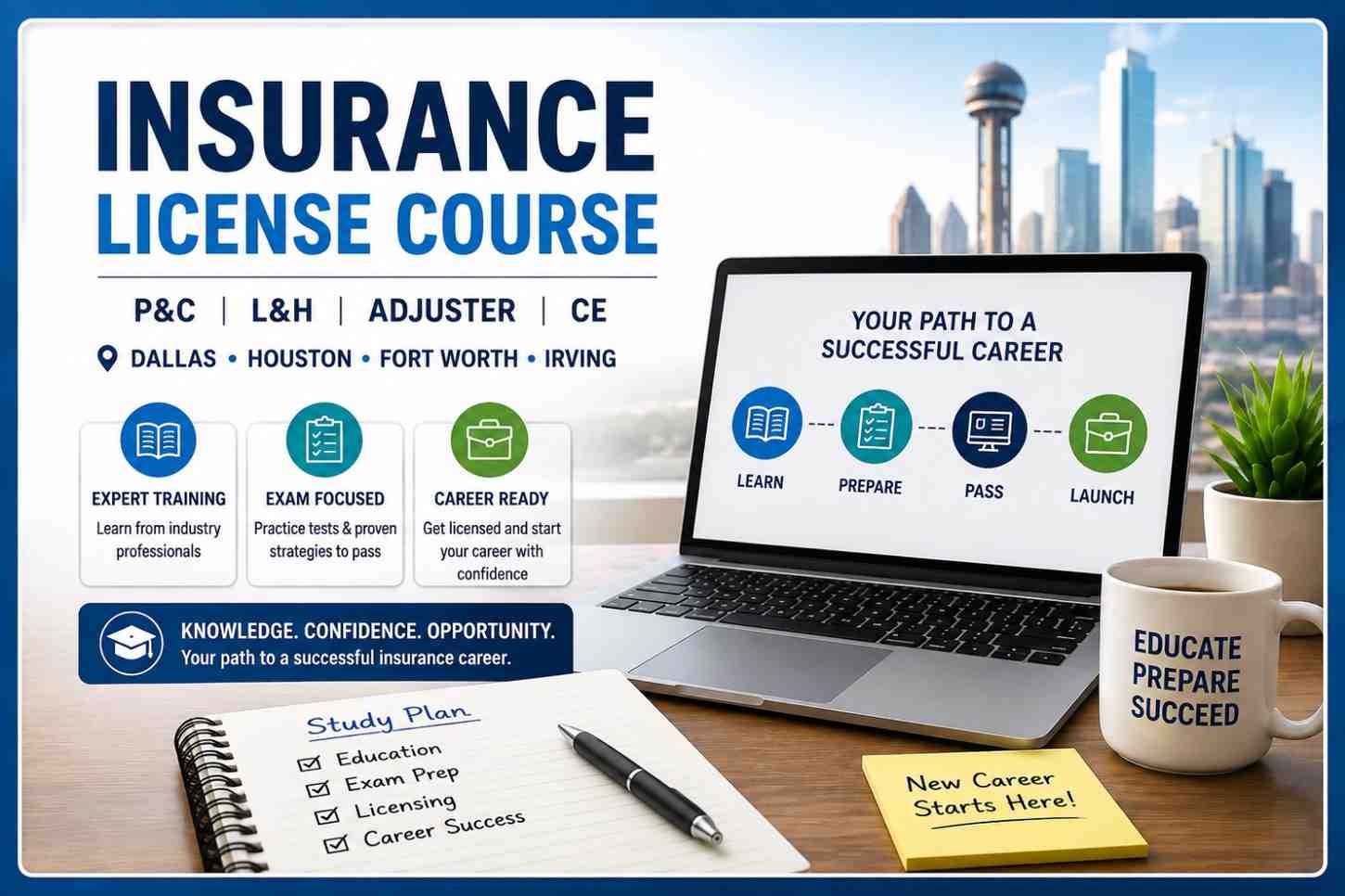
Starting an insurance license course is the first real step toward a career that pays well and keeps growing. Students in Dallas, Houston, Fort Worth, and Irving go through the same basic stages, from that first practice quiz to the first day on the job. Whether you're eyeing a career as an agent, adjuster, or broker, the right prep makes the difference between guessing your way through and walking in ready.
Key Takeaways:
-
Start by honestly assessing where you stand and setting goals you can actually hit.
-
Use active study methods and course resources to boost retention.
-
After licensing, keep an eye on job leads and continuing education (CE) requirements.
Mapping Your Route Before Class Begins
Before diving into a P&C license, L&H license, or adjuster license course, take stock of what you already know. Skim the syllabus, read the intro materials, or take a practice quiz. It tells you where to focus your energy instead of studying blind.
Gauging Your Knowledge and Skills
Rate yourself honestly on insurance laws, policies, and procedures. If basics like underwriting or risk management already feel familiar, spend more time on the harder material. Ask instructors or classmates for feedback; it sharpens your study plan fast.
Crafting Achievable Milestones
Set specific, trackable goals: finish a set number of practice exams by a date, or master one topic per week. Review and adjust the plan often. Small wins keep momentum going when the material gets tough.
Mastering the Curriculum
Whether you're in a limited lines course, a life only online course, or working toward surplus lines licensing, break big topics into smaller chunks. Flashcards and concept maps help you spot gaps early.
Applying concepts to real scenarios matters just as much as memorizing them. Work through case studies, get feedback from instructors, and stay engaged; that's what actually sticks. Students preparing for public adjuster and online adjuster licensing tend to find this hands-on approach especially useful, since exam questions often lean on real claim scenarios rather than pure definitions.
Effective Study Techniques for Retention
-
Spaced repetition: review insurance license course material at growing intervals instead of cramming.
-
Active recall: test yourself instead of re-reading notes.
-
Self-testing: build practice quizzes to find weak spots before exam day.
Leveraging Class Resources for Enhanced Learning
Attend live classes, join online discussions, and use whatever insurance license course study materials are on offer: video lectures, interactive simulations, recorded sessions. Many programs also provide one-on-one coaching and group study sessions for students across Katy, Pearland, and The Woodlands, so help is rarely far away.
Sharpening Your Exam Tactics
Performing well under time pressure takes practice. Combine practice tests, review sessions, and honest self-assessment to target weak areas before the real exam.
Strategies for Simulated Exams
Practice exams show you the format, pacing, and question style you'll actually face. Note which questions slow you down, then revisit that material. Adjust your strategy based on what the practice runs reveal.
Overcoming Pre-Test Jitters
Nerves before a big exam are normal. Remind yourself how far you've come, sleep well, eat right, and do something relaxing the night before. On exam day, arrive early, breathe, and read each question carefully. Preparation beats anxiety almost every time.
Launching Your Career After Passing
Once you're licensed, start applying to insurance companies, agencies, and brokerages. Reach out to your network for leads; a lot of first roles come through word of mouth. Graduates in Arlington, Grapevine, Humble, Kingwood, and Plano find success this way too. Job prospects depend partly on which license you hold, a P&C license may open doors as an agent or broker, while an adjuster license points you toward claims work.
Strategies for Securing Your First Role
Tailor your resume to each job and highlight relevant coursework. Practice answers to common interview questions like "why insurance?" Network at industry events, join professional groups, and connect on LinkedIn. Small, consistent effort here tends to pay off faster than people expect.
Understanding Ongoing Education Obligations
Licensed professionals in Texas must complete continuing education (CE) hours every two years, covering ethics, insurance law, and industry updates. Look for approved CE courses well before your renewal window so you're not scrambling at the last minute.
Conclusion
That's the full path of the insurance license course: from your first practice quiz through licensing, job hunting, and CE renewal. With P&C, L&H, adjuster, limited lines, life only, and surplus lines courses available across Dallas, Houston, Fort Worth, and Irving, you have what you need to build a lasting career in insurance.
FAQ
Q: What's the best way to prepare for an insurance license course?
A: Assess your current knowledge, set realistic goals, and build a study plan around your gaps. A plan tailored to your actual starting point beats a generic one every time.
Q: How do I study effectively during the course?
A: Use active learning, practice quizzes, and regular review sessions. Attend webinars and ask instructors for help when concepts get tough.
Q: What happens after I pass my exam?
A: Start applying for roles, using practice-test strategies to manage exam anxiety beforehand. Once licensed, keep up with CE requirements to stay compliant and keep advancing your career.