If you're serious about a career in insurance, getting your life insurance certification that Texas agencies recognize is one of the better moves you can make early on. It's state-recognized, builds client trust fast, and makes you genuinely better at the job, well-versed in policy types, riders, and beneficiary rules, and working inside the compliance framework Texas expects.
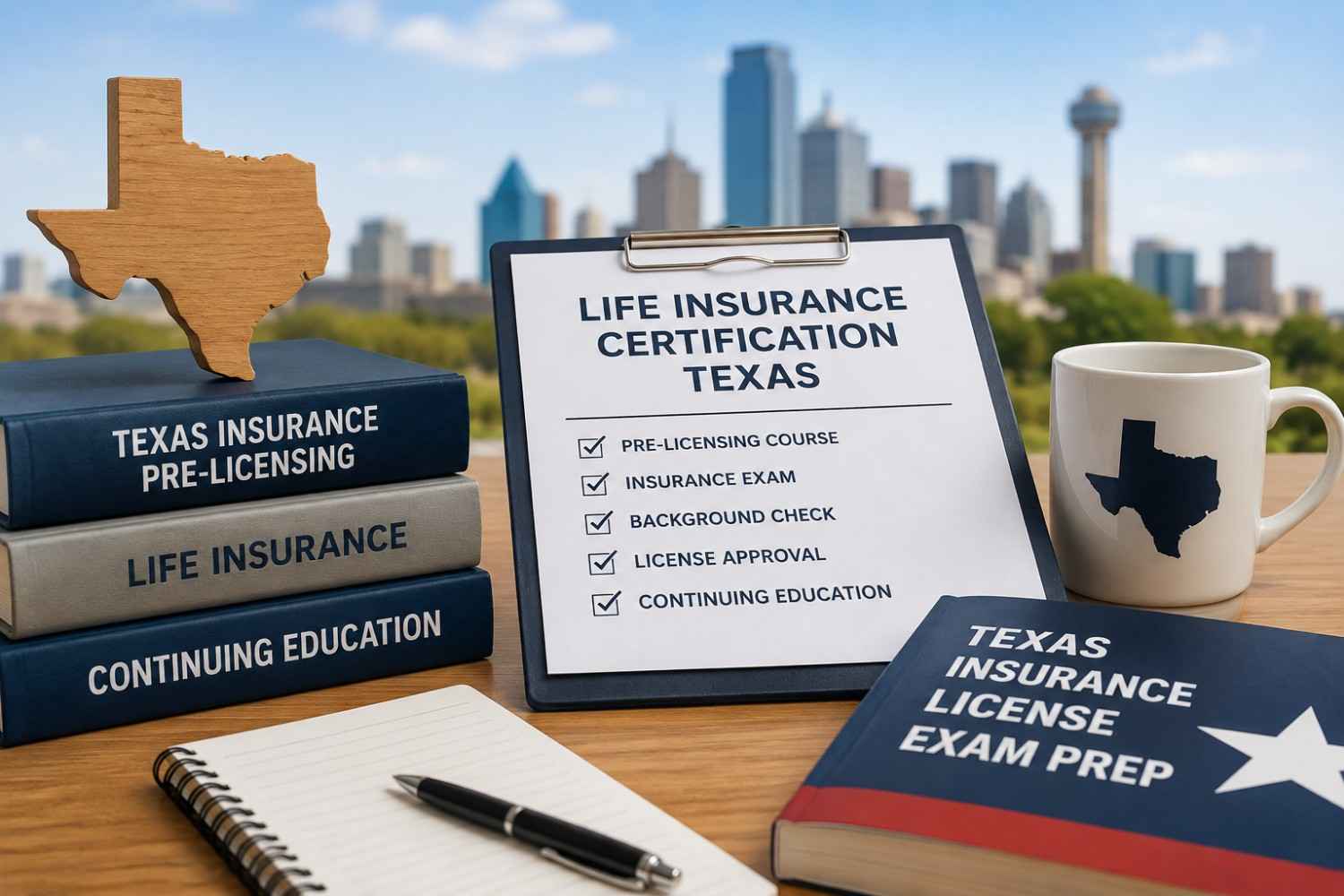
The process isn't complicated. You start with a state-mandated pre-licensing course covering fundamentals, contract basics, and ethics. Then comes the insurance license Texas exam, a background check, and your application. Once licensed, continuing education keeps things active going forward.
Key Takeaways:
-
A life insurance certification Texas credential adds credibility, opens up more career paths, and tends to raise what you can earn.
-
Continuing education isn't optional. It's what keeps your license valid.
-
Certified agents go in different directions: independent work, a company role, or folding in financial planning services.
Unpacking Licensing Prerequisites
Texas asks for about 40 hours of pre-licensing coursework before you're eligible, covering life insurance policies, annuities, and state-specific law. Texas Insurance Training Academy runs this online, which works well for candidates in Dallas, Houston, Irving, or Plano studying around a job or family schedule.
Mandatory Pre-Licensing Education Details
This is where you build the foundation: policy types, underwriting basics, risk management, all feeding directly into the life insurance certification Texas exam. Instructor support and practice exams come with the package, so you're not left guessing what to focus on before test day.
Navigating the Examination Process
Once coursework's done, you sit for the licensing exam: multiple choice, scored against a set passing line. You'll register, pick a date, pay the fee, and show up with a valid ID. Going through the official content outline ahead of time helps your study hours go toward what's actually tested.
Background Checks and Application Insights
There's also a background check, fingerprints included, plus a full application covering your education and work history. Small errors here cause real delays, so double-check everything before you hit submit.
Understanding Continuing Education Requirements
After licensing, you'll need ongoing continuing education Texas insurance hours to keep the credential active. These courses run through ethics, law updates, and whatever's changed in the industry recently, so you're not falling behind once you're out there working with clients.
Unlocking the Advantages of Certification
Certification does more than check a box. It signals real expertise, it earns client trust faster, and it opens doors that stay closed to agents without it.
Elevating Your Professional Credibility
Certified agents tend to get handed the more complicated cases, and their reputations grow because of it. Clients notice the difference between someone with a verified credential and someone without one.
Tapping into a Broader Range of Career Paths
Certification gives you options: work for an insurer, join a financial planning firm, go fully independent, or start your own agency. Courses like P&C, L&H, adjuster, and surplus lines widen what you're qualified to do even further.
Maximizing Your Earning Potential
Certified professionals generally out-earn agents who skip certification. It comes down to trust; employers and clients alike take certification as a signal you're reliable.
Fostering Client Trust and Building Confidence
Most people would rather work with a certified agent, full stop. It's proof you've cleared a real bar, not just a nice line on a resume.
Exploring Diverse Career Opportunities
Once you're certified, there's more than one direction to take things: independent agent, corporate role at an insurer, or a hybrid that folds in financial planning. Which one fits depends mostly on how much structure versus freedom you want day to day.
Charting a Path as an Independent Agent
Independent agents build their own client base from scratch. It takes decent communication skills, self-discipline, and usually a specialty, life, health, or disability coverage, to really get traction.
Corporate Opportunities within Insurance Companies
Insurance companies hire across sales, underwriting, claims, and customer support, often with real training programs built into the role from day one.
Integrating Financial Planning Services
A good number of agents eventually branch into financial planning, sometimes stacking their license with a CFP or ChFC to round out what they can offer clients.
Niche Markets: Specialization for Success
Picking a niche- seniors, long-term care, whatever fits- tends to help agents stand out faster and build a loyal client base without competing on every front at once.
Sustaining Your Certification: What You Need to Know
Staying certified isn't a one-time thing. You've got renewal deadlines, CE hours, and industry standards that shift over time, and keeping up with all of it is part of the job now.
Timelines for Renewal and Maintenance
Renewal comes around every two years. You'll need your CE hours done, fees paid, and your application in before the deadline hits, miss it and your license can lapse.
Options for Continuing Education
TITA keeps CE flexible, self-paced online courses included, which matters for busy agents in Houston, Dallas, Irving, and Plano who need to renew without putting their whole schedule on hold.
Resources for Professional Development
Industry publications, professional associations, mentorship there's no shortage of ways to stay sharp and stay visible as someone who knows the field.
Adapting to Continuous Industry Evolutions
Regulations shift, products change, and the agents who keep up through events and ongoing coursework are the ones who stay ahead instead of scrambling to catch up later.
Final Words
A life insurance certification Texas credential is a real investment in where your career goes next: more credibility, more doors open, more earning room. Texas Insurance Training Academy offers P&C, L&H, adjuster, Limited Line, Life Only, and surplus lines online courses, plus continuing education, for candidates across Texas, including Dallas, Fort Worth, Houston, and Katy.
FAQ
Q: What are the requirements for a Texas life insurance license?
A: Pre-licensing coursework, the licensing exam, a background check, and an application submitted to the Texas Department of Insurance.
Q: What are the benefits of certification?
A: More credibility, more career options, better earning potential, and stronger trust from clients.
Q: How do I maintain my license after certification?
A: Keep up with your continuing education hours and renew on time, usually every two years.