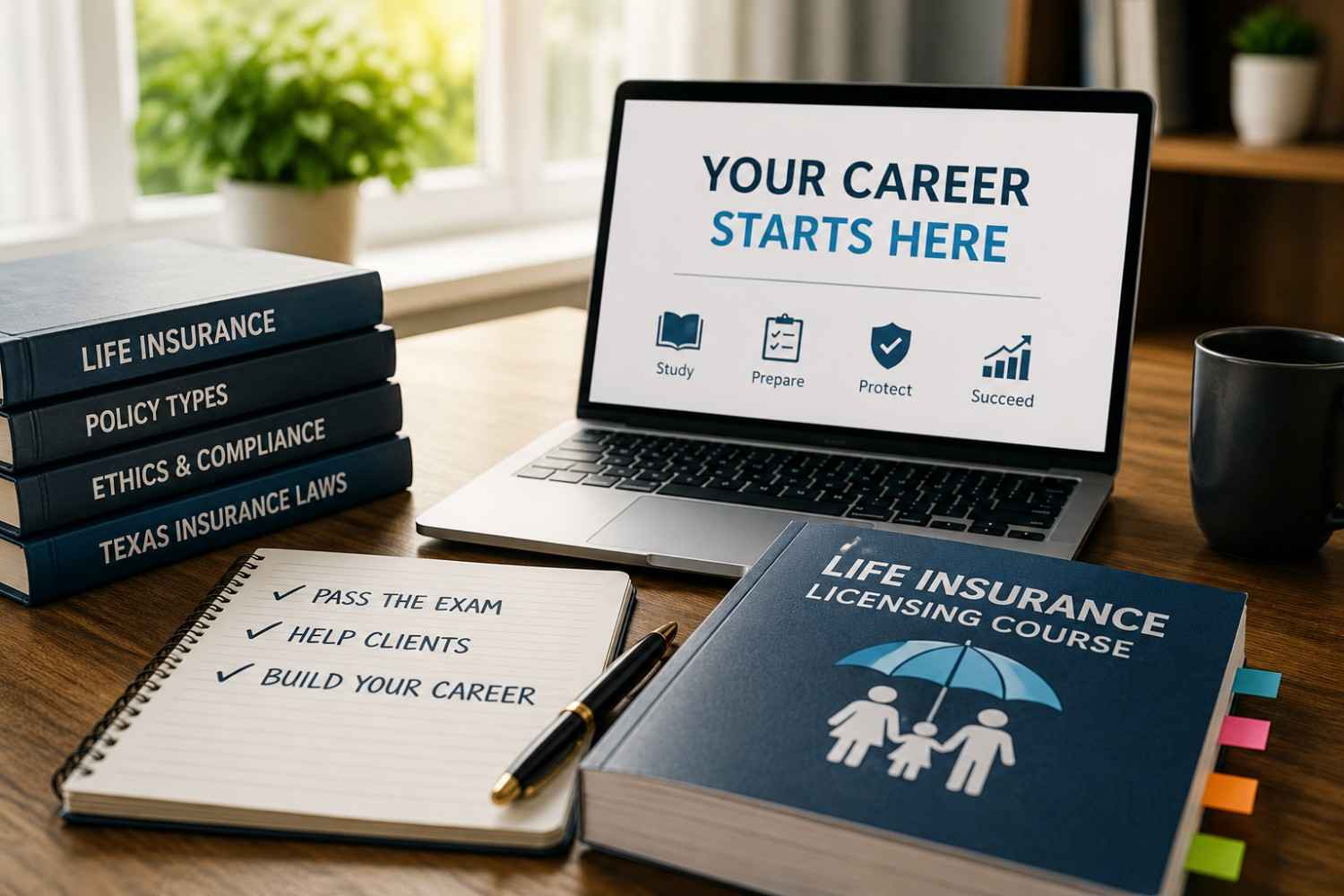
If you're thinking about a career in life insurance, the fastest way to get there isn't guesswork. It's finding life insurance courses that actually cover what the exam and the job demand: policy types, client conversations, and the rules that keep you compliant. Here's what that training really looks like, and why it matters more than most people realize before they start.
What the Curriculum Actually Covers
A solid life insurance licensing course walks you through the fundamentals first: term life, whole life, universal life, variable life, and group coverage. You'll learn what separates them, who they fit, and how to explain the differences without sounding like a textbook.
|
Policy Type |
What It Does |
|
Whole Life |
Lifetime coverage, guaranteed death benefit, builds cash value |
|
Term Life |
Coverage for a set period, guaranteed death benefit |
|
Universal Life |
Death benefit plus a savings component, flexible premiums |
|
Variable Life |
Cash value can be invested across different options |
|
Group Life |
Coverage through an employer or association |
You'll also get into riders like waiver of premium and accidental death benefit, plus terms you'll hear constantly on the job: free look period, contestability period, mortality tables, risk assessment. None of it is complicated once someone actually explains it instead of just listing it.
The Regulatory Side Nobody Loves (But Everyone Needs)
Every good insurance licensing course in Texas spends real time on compliance. That means understanding your state insurance department's requirements, how the NAIC shapes industry standards, and what federal rules like the Gramm-Leach-Bliley Act require around privacy and data protection. Skip this part, and you're not actually ready to sell; you're just ready to fail your first audit.
Client Communication Is the Real Skill
Anyone can memorize policy definitions. Fewer people can sit across from a stressed, uncertain client and help them figure out what they actually need. That's why strong P&C and L&H courses build in practice: asking the right questions, listening without rushing to a pitch, and turning a client's goals (protecting their kids, paying off a mortgage, funding retirement) into a specific recommendation.
Role-playing and simulated client meetings matter here. You practice handling objections, explaining complex terms in plain language, and reading a room. It's the difference between reciting a policy and actually helping someone make a decision they won't regret.
Sales Skills That Don't Feel Like a Sales Pitch
The best life insurance courses don't teach you to "close." It teaches you to ask better questions. Techniques like situational and needs-based questioning help you understand a client's real situation before you ever recommend a product. Paired with ethical selling standards, like full transparency on fees, commissions, and policy terms, this is what builds a book of clients who actually trust you and refer to their friends.
Practice Exams and Where You Actually Stand
Before the real life insurance licensing exam, a good program gives you practice tests and case studies that mirror the actual format. This isn't busywork. It shows you exactly where you're weak before it costs you an exam attempt, and it builds the kind of confidence that doesn't crack under pressure.
Why Certification Actually Pays Off
Certified agents consistently out-earn non-certified ones, and the gap isn't small. Employers favor licensed, trained candidates for senior and specialized roles, and certification signals that you're serious about the work, not just testing the waters. It also opens doors to specialization, like underwriting, where earning potential climbs even further.
There's a networking side too. Courses connect you with instructors, peers, and alumni already working in the field, which often turns into your first real job lead or mentor relationship.
Where to Take These Courses in Texas
Texas has no shortage of options for online adjuster courses, limited line courses, life-only licensing, surplus lines training, and continuing education, whether you're in a major metro or a growing suburb. Popular hubs for in-demand, flexible training include:
● Houston — a major hub for P&C and L&H licensing candidates
● Dallas — strong demand for adjuster and life-only courses
● Fort Worth — growing base of new agents seeking continuing education
● The Woodlands — increasingly popular for online, self-paced licensing prep
Whether you're pursuing a public adjuster license, a surplus lines certification, or simply knocking out continuing education credits, choosing a course built around real scenarios, not just memorization, makes the difference between passing on paper and actually being ready.
The Bottom Line
Life insurance courses aren't just a box to check before an exam. The right training builds the product knowledge, communication skills, and ethical foundation you need to actually succeed with clients, not just pass a test. If you're serious about this career, look for a program that treats the exam as the starting line, not the finish line.
FAQ
Q: What do life insurance courses actually cover?
A: Policy types (term, whole, universal, variable, group), client communication, risk assessment, and the regulatory rules that govern the industry.
Q: How do these courses help me pass the licensing exam?
A: Through practice exams and case studies that mirror the real test, so you know exactly where you stand before exam day.
Q: Does certification really make a career difference?
A: Yes. Certified agents typically earn more, qualify for specialized and senior roles, and build client trust faster than non-certified agents.