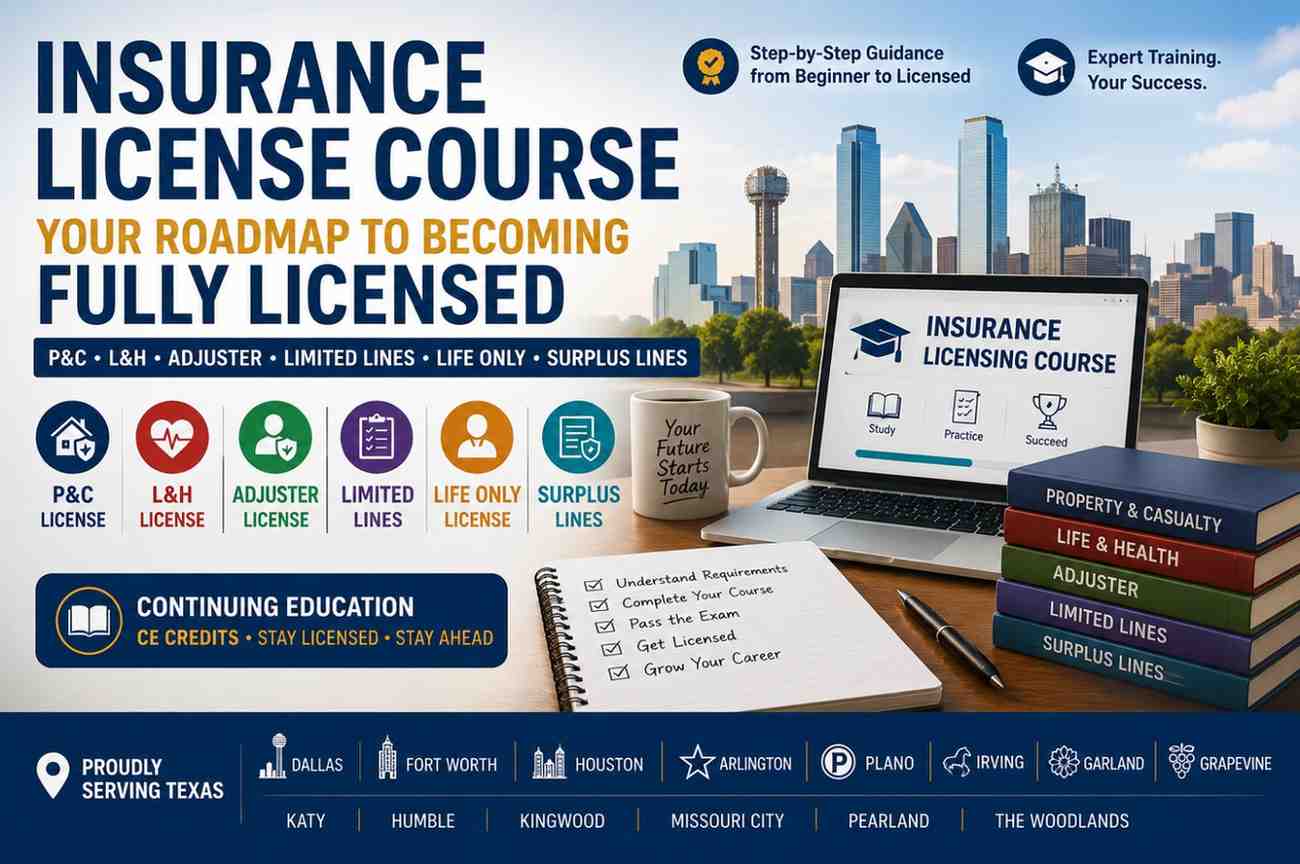
Signing up for an insurance license course is a bigger deal than it sounds. It's the first real move toward a job where you actually get to help people when they need it most. Maybe you're going for a P&C license, maybe it's L&H, or you're leaning toward becoming an adjuster. Either way, we've got you from your first night of studying to your first day on the job.
Figure Out Where You Actually Stand
Don't crack open the textbook just yet. First, get honest with yourself about what you already know. Skim through the syllabus, read the intro chapters, or take a quick practice quiz. See how you do with the terminology, the state rules, the basic policy stuff. That five-minute gut check saves you hours later, because you'll know exactly where to put your energy instead of rereading things you already get.
New to insurance license course entirely? Spend more time on the fundamentals; there's no shortcut there. Already have some background from another job or a family connection? Skip ahead to the meatier stuff like underwriting or claims. And don't underestimate a quick chat with an instructor or someone further along in the course. People are usually happy to point you in the right direction, and it can save you weeks of studying the wrong things.
Set Goals You'll Actually Stick To
Once you know where you're starting from, break the whole insurance license course into chunks you can actually finish. That might mean one unit a week, a certain number of practice tests before a specific date, or just nailing down risk management before you move on to the next thing.
Big goals are motivating in theory, but small ones are what actually get done. Check in on yourself every week or so and shift the plan if life gets in the way. Every little milestone adds up, and by the time the real exam rolls around, you'll have already proven to yourself that you can do this.
Make the Material Actually Stick
There's a lot to cover in the insurance license course - policy types, underwriting basics, claims handling, and the specific rules for Texas. Trying to absorb it all at once doesn't work. Break it into smaller pieces, make flashcards for the terms that keep tripping you up, and sketch out how different concepts connect if that helps you visually.
Two habits worth building early: spaced repetition (going back over material every few days instead of cramming) and active recall (quizzing yourself instead of just rereading your notes). Combine that with practice questions and real case studies, and you'll notice you're not just memorizing anymore; you're actually understanding how this stuff plays out in real situations. That's the difference between passing the exam and actually being good at the job afterward.
Use Whatever Help You Can Get
Whether you're working through P&C, L&H, an adjuster course (public or independent), a limited lines course, a life-only course, or surplus lines, lean on the resources built into the course. That's live classes, discussion boards, video lectures, and one-on-one help when you're stuck. There are Continuing Education options too, for once you're licensed and need to keep it current.
We work with students all over the state: Dallas, Fort Worth, Houston, Arlington, Plano, Irving, Garland, Grapevine, Katy, Humble, Kingwood, Missouri City, Pearland, and The Woodlands, and one thing we hear a lot is how much it helps to study on your own time but still have real people to ask questions when something doesn't make sense.
Walking Into the Exam Without Panicking
Timed practice exams are the closest thing to a dress rehearsal you're going to get. Notice which questions eat up your time and go back to shore up those spots. Some nerves on exam day are normal; honestly, it would be weird if you weren't a little anxious. Sleep well the night before, eat something, and give yourself more time than you think you need so you're not rushing in the door. Once you sit down, take a second, breathe, read each question all the way through, and trust the work you already put in.
What Happens After You Pass
Passing the exam isn't the finish line; it's more like the starting gun. Update your resume with your new license, then start reaching out to agencies, brokerages, and companies that are hiring where you live. Networking, whether that's showing up to industry events or just being active on LinkedIn, tends to open doors faster than sending out applications and waiting.
Once you're actually working, Texas requires you to keep up with Continuing Education hours to keep your license valid, usually covering things like ethics updates and new regulations. It's not glamorous, but it's part of staying sharp in this field.
The Bottom Line
From that first practice quiz to your first day on the job, every part of your insurance license course is building toward something real. Whether you're going for P&C, L&H, adjuster, limited lines, life only, surplus lines, or CE credits, it's worth taking seriously, and it's absolutely doable no matter where in Texas you're starting from.
Frequently Asked Questions
How do I prepare before the course even starts?
Get honest about what you already know, set goals that are actually realistic, and build a study plan around your own schedule instead of a generic one.
What's the best way to study once I'm in it?
Active recall, spaced repetition, and a steady diet of practice exams. Use the live classes and online resources instead of trying to white-knuckle it alone.
What do I do once I pass?
Start applying, use your network, and don't lose track of your Continuing Education hours down the line.