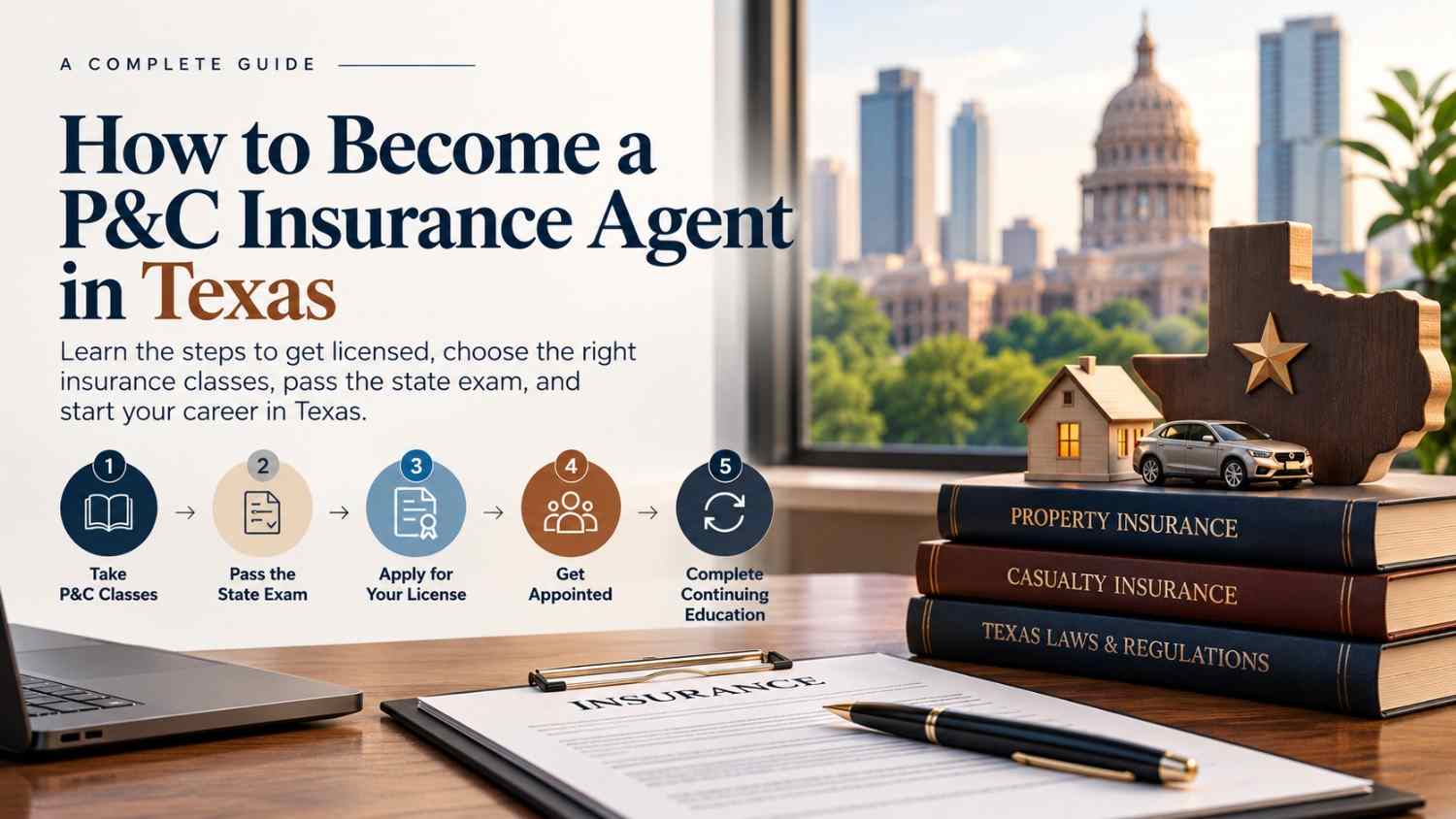
Becoming a licensed insurance agent in Texas follows a fairly predictable order: learn the material, pass the state exam, apply for your license, and get appointed with an agency or carrier. The part most people underestimate is the training itself. A property and casualty producer license lets you sell and service the policies most Texans actually buy, including auto, homeowners, and commercial coverage, so the studying needs to match what the exam will test. Here is how the process works and how to pick the right P&C insurance classes for your schedule.
What a P&C Insurance License Lets You Do
A Property and Casualty Producer License covers both sides of the business. Property insurance protects homes, buildings, and personal belongings against loss, while casualty insurance covers liability and injury-related exposure. In practice, that means you can work with auto and homeowner's insurance, workers' compensation, and commercial lines accounts. For many new agents, that mix is the appeal: one license opens doors to personal lines agencies, commercial brokerages, and claims-adjacent roles, and it gives you a reason to keep learning as your book of business grows.
Step 1: Confirm Your Texas Requirements
Before you pay for a course, confirm the current licensing requirements directly with the state insurance regulator in Texas. Rules around application steps, fingerprinting, exam scheduling, and fees do change, and the official source is always the one to trust. What you can count on is that the exam itself is the gate. Your job during training is to walk into that test prepared, which is exactly what a structured P&C insurance license course is built to do.
Step 2: Choose How You Want to Learn
Training comes in three practical formats, and the right one depends on how you study best and how quickly you need to be licensed. Each format covers the same exam content, so the decision is about accountability, pace, and access to an instructor.
In Person Property and Casualty Classes
Classroom training puts you in a room with an instructor and other candidates working toward the same license. Texas Insurance Training Academy runs an in-person Property and Casualty (P&C) license course in Dallas that teaches how to insure homes, cars, and businesses against risk. For people who learn better with a live explanation, a whiteboard, and someone to ask questions on the spot, in person property and casualty classes remove the temptation to put studying off. You also get a natural study group and a fixed schedule that keeps you moving.
Online Property and Casualty Insurance Courses
Self-paced online courses fit around a job, shifts, or family obligations. You work through the material on your own timeline from a laptop or phone, which is the practical choice for anyone who cannot commit to a classroom calendar. The tradeoff is self-discipline. If you enroll in online property and casualty insurance courses, treat the schedule like an appointment rather than a backup plan, and set a target exam date early so the coursework has a deadline attached to it.
Live Webinar Training
A live webinar splits the difference. You get an instructor teaching in real time and the ability to ask questions, without driving to a classroom. It works well for candidates who want structure but live outside the Dallas area or need to keep working while they train.
What You Will Study in P&C Insurance Classes
The coursework builds from fundamentals to specific policy types. Expect your program to cover:
-
Property and casualty insurance basics, including how risk is transferred and how premiums are determined
-
Common policy provisions that appear across most contracts
-
Dwelling and homeowner's policies, including coverage limits and exclusions
-
Auto insurance, including liability, collision, and coverage requirements
-
Commercial lines, workers' compensation, and business liability exposure
The goal is not memorizing definitions. It is being able to read a policy scenario and reason through what is covered, what is excluded, and how much the policy pays. Exam questions reward that kind of thinking, and so does the job once you are licensed.
Step 3: Pass the Texas Exam
Exam prep is where a good course earns its keep. Texas Insurance Training Academy reports that 90% of its students pass on their first attempt, which reflects a prep system built around state-specific material rather than generic insurance theory. The most effective routine is consistent short study sessions, frequent practice questions, and a full review of anything you missed. Do not schedule your exam until your practice scores are steady, not just occasionally high.
Step 4: Apply for Your License and Get Appointed
Once you pass, you move into the application phase. You submit your license application to the state, complete any remaining requirements such as background checks, and wait for approval. After the license is issued, a carrier or agency appoints you so you can legally write business on their behalf. Many agencies will not interview candidates without a license in hand, so finishing training and testing quickly is what turns a job search into a start date.
Step 5: Keep Your License Current With Continuing Education
A Texas license is not a one-time achievement. Renewal requires continuing education credits, and the requirement repeats on a set cycle. Texas Insurance Training Academy offers CE packages for Texas license renewal that cover 83 credit hours across 16 courses for $49.90, which makes compliance a single purchase instead of a scattered to-do list. Knocking out CE early keeps you focused on selling rather than scrambling before a renewal deadline.
Why Train With Texas Insurance Training Academy
The academy exists for one purpose: getting candidates licensed. Courses are available online, by live webinar, and in a Dallas classroom, so you can start in the format that matches your life. Support runs Monday through Friday, 9am to 5pm, by phone at (855) 444-6499 or email at info@examtx.com. If you are ready to earn your P&C insurance license, choose your course and set a start date this week. Momentum matters more than perfect timing.
Frequently Asked Questions
How long does it take to become a P&C insurance agent in Texas?
Timelines vary based on the format you choose, how much time you can study each week, and how quickly the state processes your application after you pass the exam. Self-paced candidates usually move at their own speed, while classroom students follow a fixed schedule. Pick a target exam date early, then confirm current processing times with the state insurance regulator.
Do I need in person property and casualty classes, or can I study online?
Both formats prepare you for the same exam. Classroom training gives you an instructor and a set schedule, which helps candidates who procrastinate or learn through discussion. Online courses offer flexibility for people working full time or living outside the Dallas area. Live webinars combine instructor access with remote convenience. Choose based on how you actually study, not what sounds easiest.
What does a casualty license let me sell?
Casualty coverage generally addresses liability and injury-related exposure, while the property side covers homes, buildings, and belongings. Held together as a Property and Casualty Producer License, this lets you work with auto and homeowner's insurance, workers' compensation, and commercial lines accounts. Verify the exact scope of your license with the state before you start writing business.
How do I enroll in P&C insurance classes?
Contact Texas Insurance Training Academy to discuss your options across online, live webinar, and Dallas classroom formats. Support is available Monday through Friday, 9am to 5pm, at (855) 444-6499 or info@examtx.com. An advisor can help you pick the course that fits your schedule and answer questions about exam prep before you commit.