How to Pick the Right Adjuster License Class in Texas (Without Wasting Time or Money)
Key Takeaways
-
Texas adjusters can train online, in person, or through self-paced formats, and each one fits a different kind of schedule and learning style.
-
Course flexibility and instructor support matter more than most people expect once real life (jobs, kids, deadlines) gets in the way of studying.
-
Weighing tuition against your potential income as a licensed adjuster helps you pick a class that actually pays for itself.
Navigating the Landscape of Adjuster License Classes
Most people don’t set out to become an insurance adjuster. They land there after a career change, a layoff, or simply hearing that the pay is solid and the barrier to entry is lower than people assume. Once that decision is made, though, the next question trips a lot of them up: which adjuster license class in Texas actually fits their situation? Cities like Dallas, Houston, Fort Worth, and Irving are full of training options, and on paper they all promise the same outcome. The difference shows up later, in whether you actually finish the course and pass the exam, not in the marketing copy.
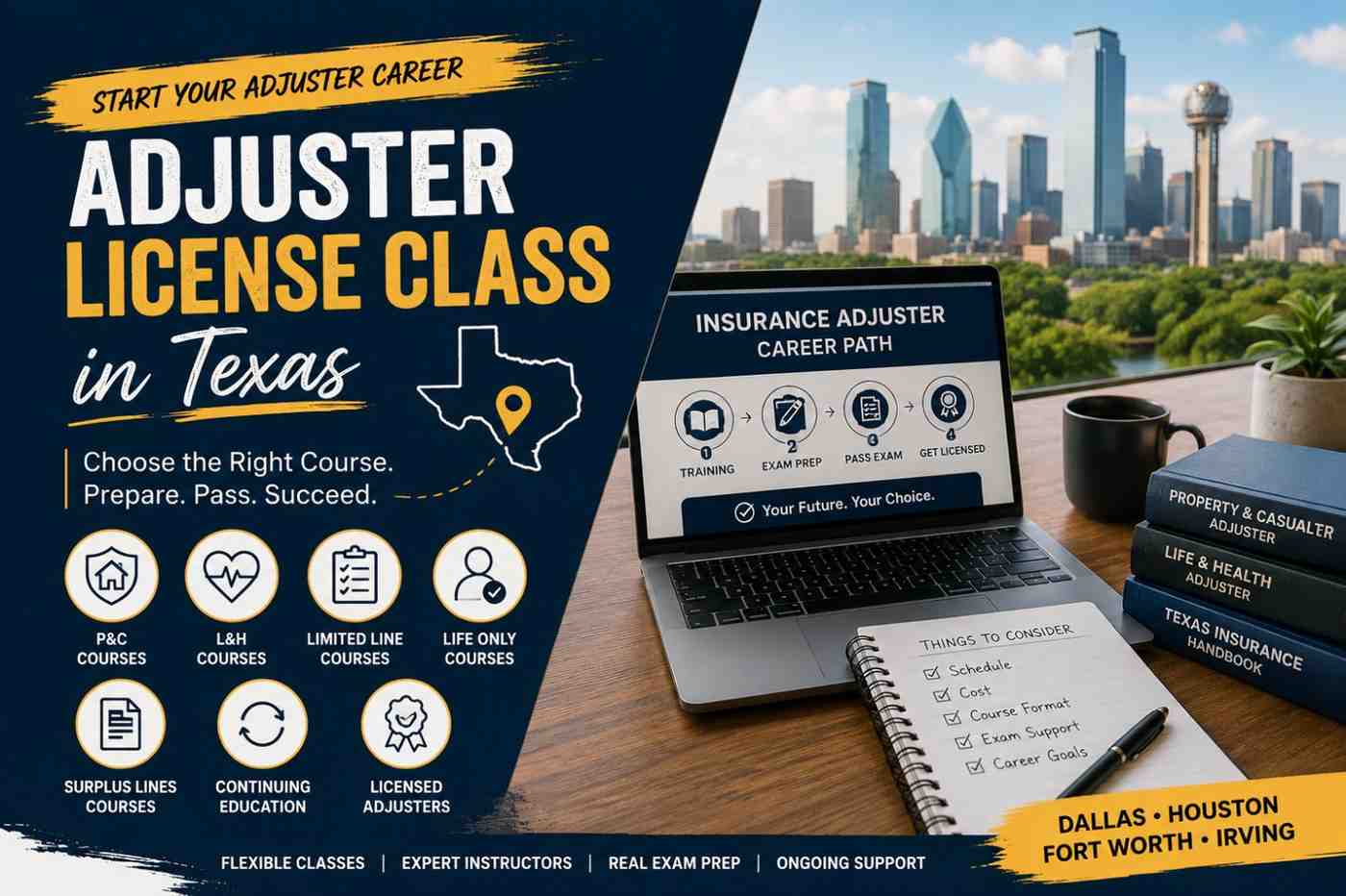
Courses generally fall into a few categories: P&C (Property and Casualty) Adjuster courses, L&H (Life and Health) Adjuster courses, Limited Line courses, Life Only courses, Surplus Lines courses, and Continuing Education for adjusters renewing an existing license. Picking the right one starts with knowing which license you’re actually working toward.
Online vs. In-Person Options
Online classes typically include video lectures, interactive modules, and digital exams, and most let you move at your own pace. In-person classes, on the other hand, put you in a room with an instructor and other students, which some people find easier for staying accountable and asking questions in real time.
Neither format is objectively “better.” Someone in Katy juggling a full-time job might lean toward online learning simply because it fits around their hours. Someone newer to the material might prefer the structure of sitting in a classroom in Plano or The Woodlands. It comes down to preference, not prestige.
Self-Paced Learning for Busy Schedules
Self-paced online courses tend to work best for people balancing work, family, or other commitments. You can study early mornings, late nights, or in short bursts on weekends, and revisit tricky sections as many times as you need. Most self-paced formats also include practice exams, which help you spot weak areas before test day instead of during it.
Essential Considerations for Aspiring Adjusters
Before enrolling, think honestly about how a class will fit into your week. Your schedule, learning style, and financial situation all shape which format makes sense.
Schedule Flexibility
If your work hours are unpredictable or you have family obligations, an online or self-paced course usually offers more breathing room. If you do better with routine and outside accountability, an in-person class in a city like Houston might suit you better. Some programs also offer payment plans, which can ease the financial pressure of getting licensed.
Why Support Availability Matters
Questions will come up no matter how good the course material is. Look for programs that give you real access to instructors, whether through office hours, online forums, or study groups. Some providers also help with job placement or point you toward next steps after you pass your exam. That kind of support can make the difference between finishing strong and losing momentum halfway through.
Weighing the Cost Against the Payoff
Tuition for adjuster courses in Texas varies widely, from a few hundred dollars to several thousand, depending on the format and materials included. Cheaper doesn’t always mean better value, and pricier doesn’t always mean more thorough. Compare what’s actually included: study guides, practice tests, instructor access, and exam prep.
It helps to think about return on investment. Licensed adjusters in Texas can earn anywhere from $50,000 to over $100,000 annually, depending on experience and specialty. Spending $1,000 on a solid course that helps you land a $60,000-a-year role is a fairly easy trade-off to justify.
Understanding State Requirements
Every adjuster license class should align with Texas Department of Insurance (TDI) standards. That generally means completing a minimum number of training hours, passing the state exam, and submitting your application through the Sircon system. Requirements shift slightly depending on the license type, whether that’s Property and Casualty, Workers’ Compensation, or Crop Insurance, so confirm the specifics before you enroll.
Staying current on Texas Insurance Code rules and TDI guidelines isn’t optional. It protects your license and keeps you compliant as you build your career.
Certifications Worth Pursuing
Once licensed, certifications like the Certified Adjuster (CA) or Senior Claims Law Associate (SCLA) can help you specialize and boost your earning potential. The CA typically requires around two years of experience, while the SCLA requires closer to five. Both signal to employers that you’re serious about the field.
Final Words
Choosing the right adjuster license class in Texas comes down to matching the format, cost, and support level to your real life, not the other way around. Whether you’re in Dallas, Fort Worth, Houston, or Irving, take the time to compare programs before you commit.
FAQ
Q: What types of adjuster license classes are available in Texas?
A: Options include online, in-person, and self-paced formats, covering P&C, L&H, Limited Line, Life Only, and Surplus Lines courses, along with Continuing Education for renewals.
Q: What should I consider when choosing a class?
A: Schedule flexibility, support availability, and self-paced options all matter. The right fit depends on your routine, learning style, and how much guidance you want along the way.
Q: How do I make sure I get enough support during the course?
A: Look for programs offering instructor access, study forums, or peer groups, and confirm what kind of help is available if you get stuck before exam day.