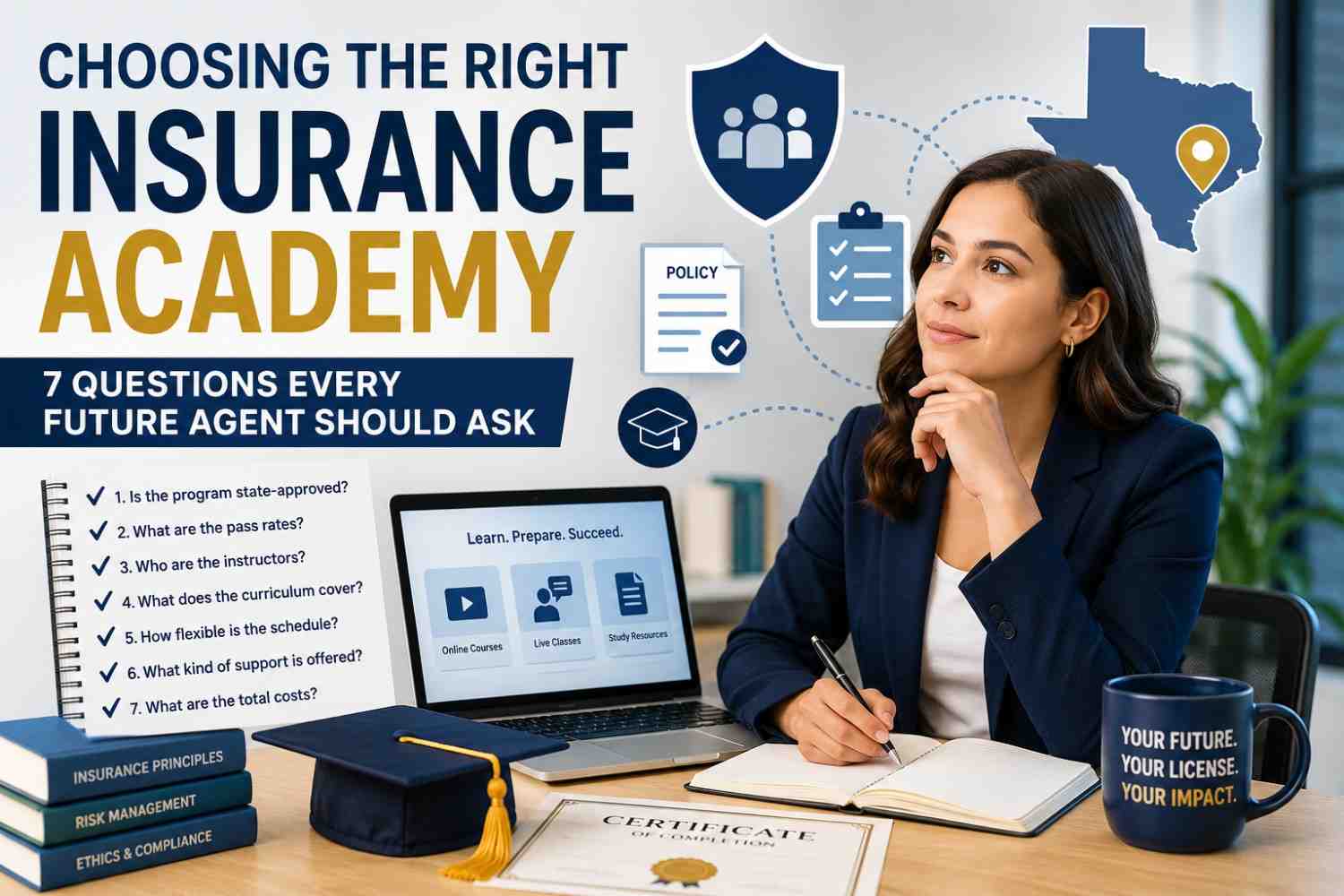
Picking an insurance training academy is one of those decisions people rush through, and then spend the next year regretting. If you're weighing your options for becoming a licensed insurance agent, it's worth slowing down here. Good academies run the full spectrum of insurance training academy courses: Property and Casualty, Life & Health, adjuster (public and online adjuster), limited lines, life only, surplus lines, plus continuing education, and they serve agents all over Dallas, Houston, Fort Worth, and Irving. But before you sign up anywhere, ask a few pointed questions first.
Key Takeaways
-
Accreditation and years in business tell you a lot. Texas Insurance Training Academy is a solid example of what to look for.
-
Pass rates and job placement numbers matter more than the sales pitch. Ask for them.
-
Don't skip the support piece- career counseling, continuing education; that stuff adds up after you're licensed.
Credentials That Matter: Vetting Your Choices
This part is simple, even if people skip it. Check whether the insurance training academy is accredited by a recognized body; a state licensing board is a good place to start. It tells you whether the training actually holds up. Texas Insurance Training Academy has stayed close to Texas Department of Insurance requirements over the years, which matters whether you're going for a P&C license, an L&H license, or working toward an adjuster license online.
Then ask how long they've been around. Not because older automatically means better, but a school that's been doing this for a while has usually worked the kinks out of its curriculum and built a real bench of instructors. That's true whether you're based in Dallas, Houston, Kingwood, or Galveston.
Measuring Success: The Metrics That Count
Credentials get you in the door. What happens after that is where the real story is.
What Are Your Pass Rates?
A pass rate above 90 percent is a reasonable bar. Below that, start asking why. Get actual numbers, not a general "our students do great," and compare a few schools side by side before you commit.
How Many Graduates Find Jobs?
Ask this directly. An insurance training academy should know how many of its graduates are working, and where. This is usually where you find out whether the school has real relationships in the industry or just a good brochure.
Support Systems: Ensuring Your Future Success
Passing the exam isn't the finish line. Ask what the insurance training academy does after that: career counseling, resume help, any actual connections to insurance companies that are hiring. Texas Insurance Training Academy backs this up with continuing education classes too, so agents aren't left scrambling once they're out on their own.
Navigating Your Options: Smart Comparison Strategies
A side-by-side chart makes this a lot less overwhelming:
|
Academy Features |
Details |
|
Accreditation |
Yes/No |
|
Pass Rates |
Percentage |
|
Courses Offered |
P&C, L&H, Adjuster, Limited Lines, Life Only, Surplus Lines |
|
Career Services |
Types of services offered |
Comparing Your Options: Key Factors to Consider
-
Accreditation from a body that's actually recognized
-
Pass rates that hold up under scrutiny
-
A course catalog that covers P&C, L&H, surplus lines, and continuing education, not just one narrow path
-
Career support that goes beyond a pamphlet
Red Flags to Avoid
A few warning signs are worth knowing before you narrow your list down:
|
Red Flag |
Warning Sign |
|
Low Pass Rates |
Below 80 percent |
|
Limited Career Services |
No job placement help |
|
Lack of Accreditation |
No recognized accrediting body |
The Impact of Industry Connections: Building Your Network
Here's something people underestimate: the insurance training academy you choose shapes the network you walk away with. A school with real relationships with insurance companies, and actual chances to meet people already working in the field through career fairs or industry events, gives you more than a certificate. Those connections often end up mattering just as much as anything you learned in class.
Final Words
At this point, you've got the questions that matter when it comes to finding the best insurance training academy. Look hard at credentials, pass rates, and support, and don't accept vague answers when you ask about them. Texas Insurance Training Academy, serving students across Dallas, Houston, Fort Worth, and Irving, covers P&C, L&H, adjuster, limited lines, life only, and surplus lines courses online, along with continuing education, for agents building a real career in insurance.
FAQ
Q: What should I look for when choosing an insurance academy?
A: Accreditation, pass rates, and career support, in that order. Texas Insurance Training Academy checks all three, with a full course catalog and instructors who know the material.
Q: How do I know if an academy actually prepares students well?
A: Ask for pass rates and job placement numbers, not just claims. A school like Texas Insurance Training Academy should be able to back up what it says.
Q: What kind of support should I expect after I'm licensed?
A: Continuing education, an alumni network, ongoing career support. Texas Insurance Training Academy offers all of it, so agents keep growing instead of stalling out after the exam.