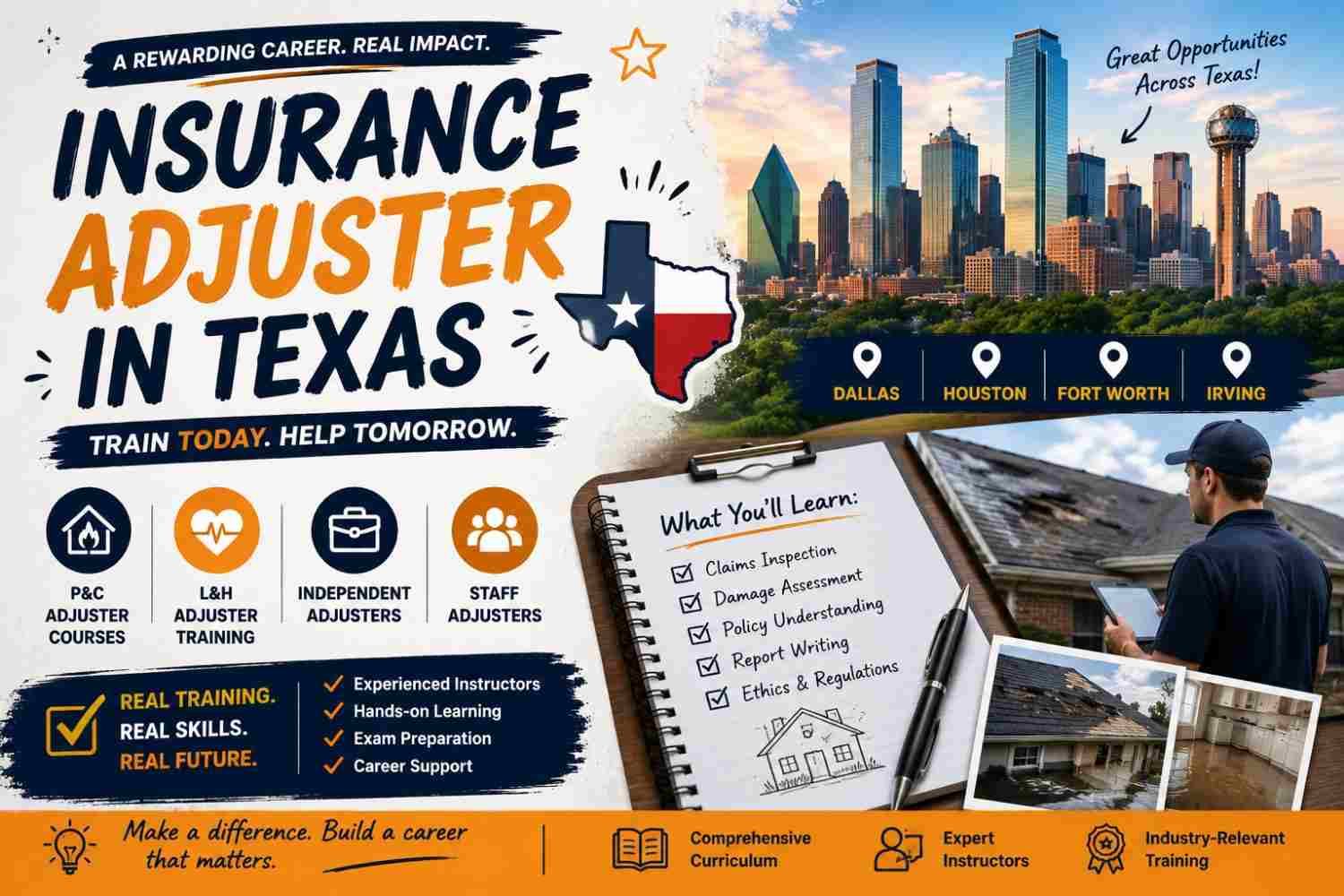
A hailstorm rolls through, a pipe bursts, a kitchen fire gets out of hand, and somebody has to walk in, figure out what happened, and put a number on it. That's the job of an insurance adjuster in Texas, and it's a busier field than most people realize, especially around Dallas, Houston, Fort Worth, and Irving. Getting there starts with training that covers the policy side and the practical side in equal measure.
The Road to Becoming an Insurance Adjuster
Every insurance adjuster in Texas starts somewhere, and that somewhere is training. You'll pick up insurance policies, claim handling, and communication skills along the way, but more than that, you'll get a real feel for what the job actually looks like once you're doing it.
Overview of training content
Texas adjuster training generally covers policy types, the claims process, and state rules you'll need to know cold. There's also room to specialize. Depending on where you want to end up, you might look at P&C adjuster courses, L&H adjuster training, limited line courses, life-only licensing, surplus lines courses, or continuing education classes to keep an existing license active.
Field vs. desk adjuster roles
There are really two directions this can go when it comes to becoming an insurance adjuster in Texas. Field adjusters are out inspecting damage and gathering evidence in person. Desk adjusters stay put, reviewing files, processing claims, and talking with policyholders over the phone or email. Most training programs touch on both, so you're not locked in before you've even started.
What Makes Texas Adjuster Training Stand Out
Good training goes past textbook theory. The best programs pair coursework with actual instructor feedback, so you're not just memorizing terms; you're learning how claims really get handled.
Key Takeaways:
● Training should cover both field and desk adjuster work, not just one.
● A solid curriculum means policy knowledge, claims handling, and real communication practice.
● Picking the right program early sets up a career that actually lasts.
Navigating the Insurance Adjuster Landscape in Texas
Coursework typically walks through policy coverage, claims handling, and communication, plus the three main adjuster types: staff, independent, and catastrophe. Staff adjusters are employed directly by an insurer. Independent adjusters work contract to contract, sometimes for several companies at once. Somewhere in there, you'll also learn how the Texas Department of Insurance oversees licensing, which is worth understanding before you're on the job, not after.
Key Responsibilities of an Insurance Adjuster
The job comes down to investigating and settling claims, and that takes more than paperwork skills. Adjusters inspect damaged property, interview claimants, dig through records, and negotiate with contractors or medical providers. A lot of this happens with people who are having a rough week, so staying calm and fair matters just as much as knowing the technical side.
Essential Skills for Success in Adjusting
There's a technical side to this job and a people side, and you need both. Training covers policy knowledge, claims procedures, and the regulations you're bound by, but you'll also need to manage your own time well enough to juggle several open cases at once. Negotiation skills come in handy constantly, and the adjusters who keep learning after training ends tend to stay ahead.
The Training Blueprint: What to Expect
Core curriculum and learning objectives
Expect to work through personal and commercial policy types, how to read policy language correctly, and the claims process start to finish, from first notice to final settlement. Communication skills get built in too, since you'll be dealing directly with policyholders and agents.
Hands-on training and practical experience
Simulated claims are where things click. You'll inspect a mock property, work through a negotiation, and apply what's been covered in class to something closer to the real thing. Some programs go a step further with ride-alongs alongside working adjusters, which is often the moment training starts feeling like an actual job.
Field Adjusters vs. Desk Adjusters: A Comparison
|
Role |
Responsibilities |
|
Field Adjuster |
On-site inspections, evidence gathering, damage assessment |
|
Desk Adjuster |
Claims review, policyholder communication, settlement negotiation |
Day-to-day operations of each role
A field adjuster's day is full of movement: inspections, photos, notes, and conversations with policyholders about what happens next. A desk adjuster's day looks quieter on the surface, mostly file reviews and negotiations, but it can get just as busy once the claims start piling up.
Advantages and disadvantages of each path
Field work means variety and a lot of independence, but also unpredictable hours, especially right after a major storm rolls through. Desk work trades that unpredictability for a steadier routine, though it can start to feel repetitive after a while. Neither is objectively better. It really depends on what kind of week you want to have.
Elevating Your Training: Unique Offerings in Texas
Specialized courses and certifications
Once the basics are covered, there's room to specialize in property, flood, or fire claims, along with continuing education to keep a license current. Certifications like the Certified Insurance Adjuster (CIA) or Certified Property Insurance Adjuster (CPIA) aren't required everywhere, but they do carry weight on a resume.
Networking opportunities and industry connections
Programs around Katy, Plano, and The Woodlands often put students in the same room as working adjusters, which turns into mentorships more often than you'd expect. Those relationships end up mattering just as much as anything covered in class.
Preparing for Your Career: Tips and Strategies
● Stay organized. Multiple claims and deadlines pile up fast.
● Work on communication. Policyholders and agents notice the difference.
● Get familiar with the software and tools adjusters use every day.
Recommended study habits and resources
Go back over course material on a regular schedule instead of all at once, and try putting things in your own words as you take notes. Podcasts and industry publications help too, mostly because they keep the material from going stale between study sessions.
Navigating licensing and certification requirements
Getting licensed in Texas means passing a state exam through the Texas Department of Insurance and staying current on continuing education after that. Background checks and bonding requirements are part of the process too, so it's worth building extra time into your timeline for those steps rather than assuming they'll be quick.
Conclusion
Good training gets you into this career with an actual understanding of policies, claims, and what the work is really like day to day, not just a certificate. Field or desk, the foundation is what carries you once you're a licensed insurance adjuster in Texas and working on your own.
FAQs
What can I expect from insurance adjuster training in Texas?
You'll get solid coverage of policies, claims, and regulations, plus real practice with the communication and analysis skills the job actually requires.
What topics do training programs typically cover?
Insurance policies, claims handling, ethics, and Texas-specific laws, spanning property, casualty, and workers' compensation lines.
What's the difference between field and desk adjuster roles?
Field adjusters are out inspecting properties in person. Desk adjusters review and process claims from an office. Whether you'd rather be on the road or at a desk usually settles the choice.